

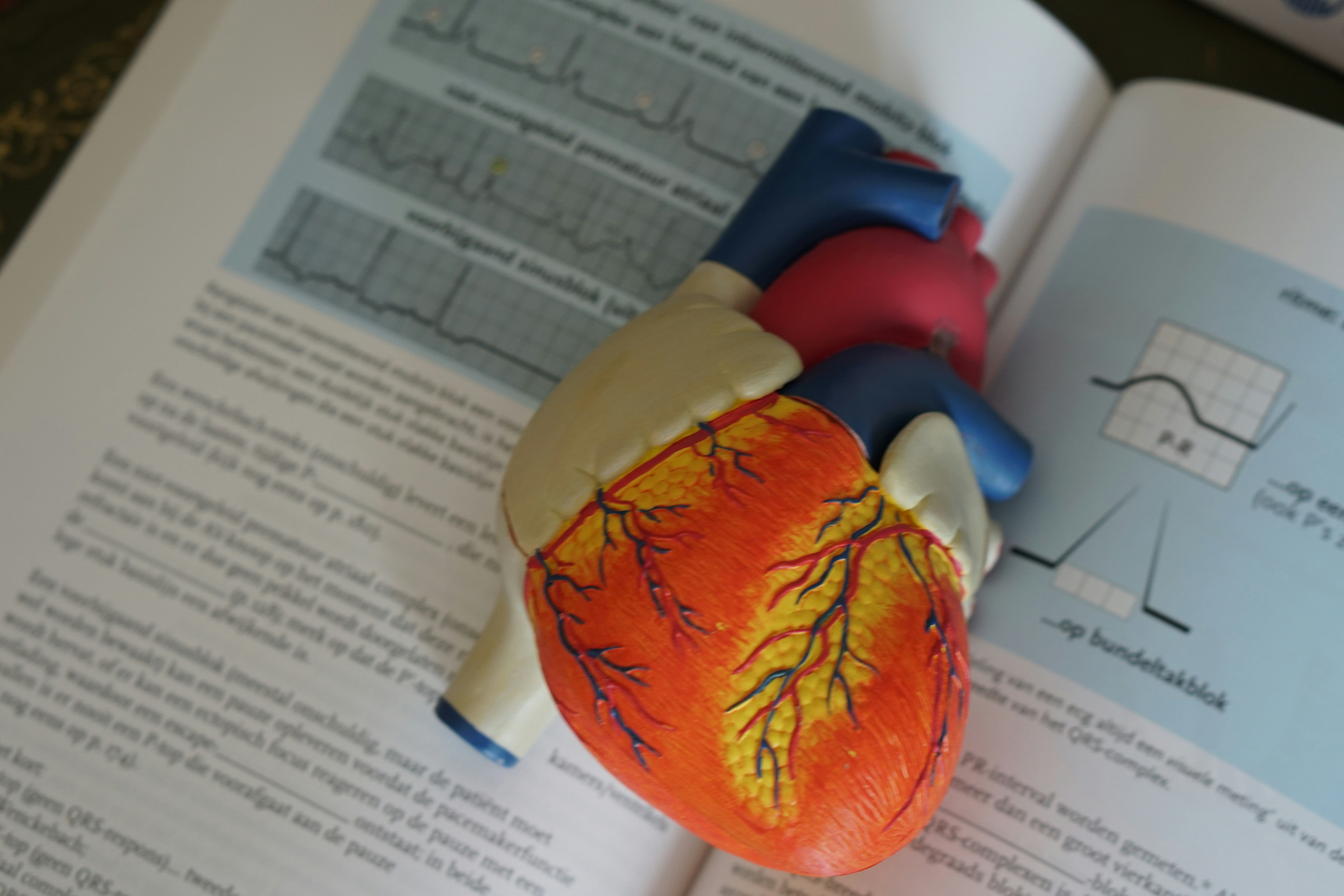
There’s a reason A&P II has a higher withdrawal rate than A&P I. It’s not that the material is harder to memorize—it’s that the systems become interdependent. The heart depends on the kidneys. The kidneys depend on blood pressure. Blood pressure depends on hormones. And somewhere in that tangled web, students lose their footing.
If you’ve ever stared at a diagram of the Renin-Angiotensin-Aldosterone System (RAAS) and felt your brain short-circuit, you’re not alone. This unit is the GPA killer professors love to test—because it demands multi-system synthesis. But here’s the secret: these cascades aren’t random. They’re domino effects. Once you see the pattern, the fear evaporates.
The Bottleneck: Why These Systems Overwhelm Students
The cardiovascular and urinary systems overwhelm students for three reasons:
They’re interconnected. A change in blood volume affects blood pressure, which affects filtration rate, which affects hormone release—which circles back to blood pressure. Students try to memorize each step in isolation, losing the thread of the whole loop.
They involve cascading mechanisms. RAAS alone has over a dozen steps. Cardiac action potentials involve multiple ion channels opening and closing in precise sequence. Miss one step, and the entire chain collapses.
Exams test “what if” scenarios. Professors don’t ask “What is renin?” They ask: “What happens to blood pressure if angiotensin-converting enzyme is inhibited?” This requires synthesis, not recall.
Step-by-Step Breakdown: RAAS as a Domino Effect
Stop thinking of RAAS as a list to memorize. Think of it as a story with a trigger.
The Trigger: Blood pressure drops (due to hemorrhage, dehydration, or heart failure).
Domino 1: The kidneys detect low perfusion and release renin.
Domino 2: Renin converts angiotensinogen (from the liver) into angiotensin I.
Domino 3: Angiotensin-converting enzyme (ACE), found in lung capillaries, converts angiotensin I into angiotensin II.
Domino 4: Angiotensin II is a powerful vasoconstrictor—it narrows blood vessels, raising blood pressure immediately.
Domino 5: Angiotensin II also stimulates the adrenal cortex to release aldosterone.
Domino 6: Aldosterone acts on the kidneys, increasing sodium reabsorption (and water follows sodium). Blood volume rises.
Domino 7: Blood pressure normalizes.
The Key Insight: Every step serves the same goal—restoring blood pressure. When you understand the purpose of the cascade, the individual steps become logical, not arbitrary.
Cardiac Action Potentials: The Same Principle
Apply the domino framework to cardiac action potentials. The goal? Coordinated contraction.
Phase 0: Sodium channels open → rapid depolarization.
Phase 1: Sodium channels close → early repolarization.
Phase 2: Calcium channels open → plateau (prolonged depolarization allows time for contraction).
Phase 3: Calcium channels close, potassium channels open → repolarization.
Phase 4: Resting potential restored.
Why it works: Each phase enables the next. The plateau phase isn’t random—it prevents tetanic contraction, ensuring the heart pumps rather than seizes.
Exam Strategy: Decoding “What Happens If…” Questions
These questions terrify students because they require mental simulation. Here’s a systematic approach:
Step 1: Identify the variable being changed (e.g., ACE inhibitor administered).
Step 2: Locate that step in the cascade. (ACE converts angiotensin I to angiotensin II.)
Step 3: Trace the effect forward. (Less angiotensin II → less vasoconstriction → lower blood pressure. Less aldosterone → less sodium retention → lower blood volume.)
Step 4: Consider compensatory mechanisms. (Will the body try to counteract this? How?)
Example Question:
A patient takes an ACE inhibitor. What happens to potassium levels?
Answer: ACE inhibition reduces aldosterone. Aldosterone normally promotes potassium excretion. Less aldosterone → potassium retention → hyperkalemia risk.
See how the domino effect works? Once you understand the cascade, the answer emerges logically.
When to Seek Support
If you’re struggling to connect these systems, you don’t have to face A&P II alone. At USWritersPro, we’ve helped countless nursing and pre-health students conquer RAAS, cardiac physiology, and acid-base balance. Our tutors break down complex cascades into manageable steps—and help you build the systems-thinking skills that make exams predictable.
We offer:
One-on-one tutoring for A&P II lecture and lab.
Step-by-step breakdowns of complex mechanisms.
Exam preparation focused on “what if” question strategies.
Assignment assistance for case studies and research papers.
Ready to master A&P II’s most feared unit?
Contact USWritersPro Today for expert tutoring and academic support tailored to your needs. Turn cascading confusion into confident mastery—and watch your grades rise.