

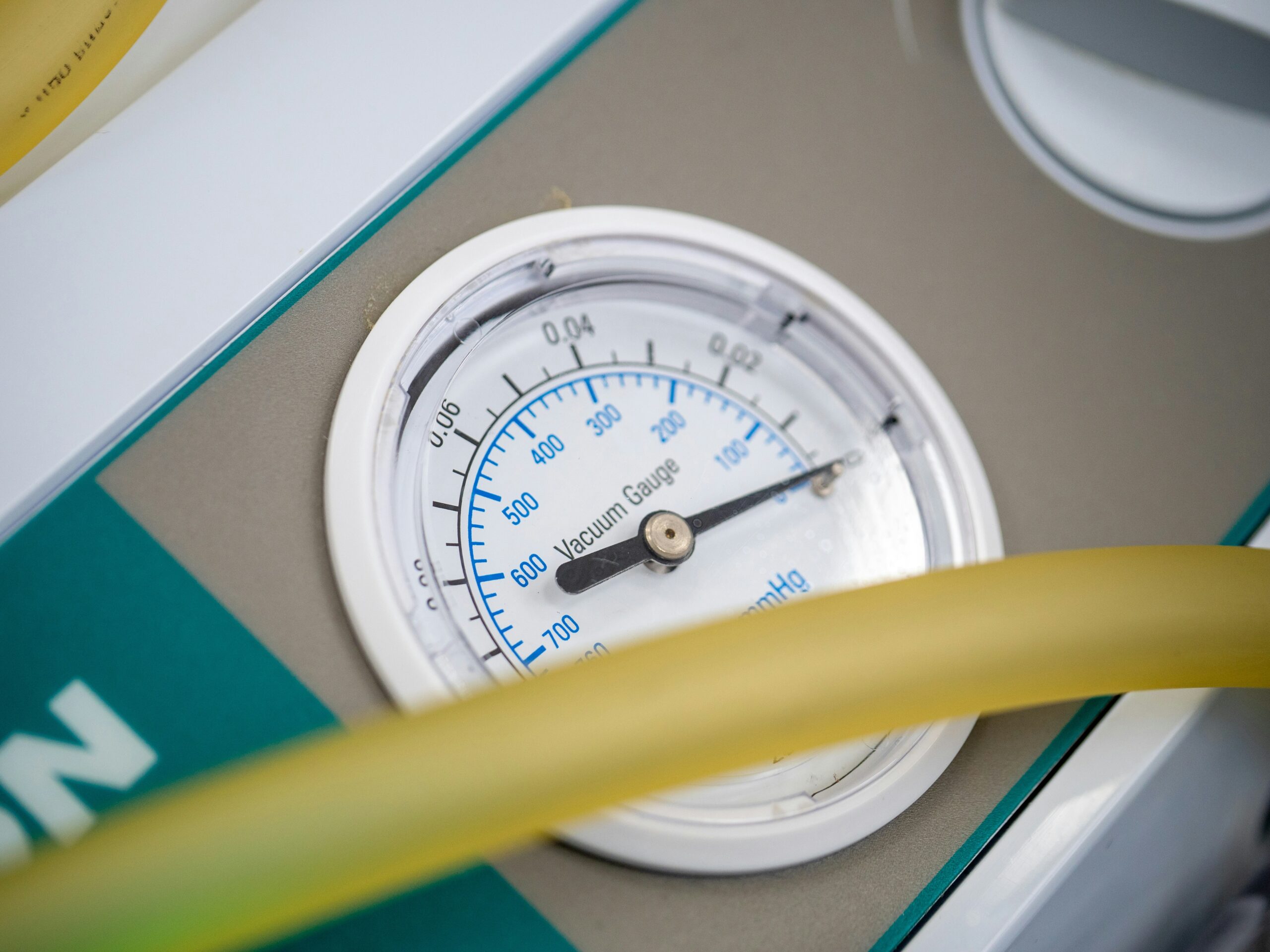
Imagine pumping up a bicycle tire. After just a few strokes, you notice the pump feels warm to the touch. You’re not imagining it—that’s physics in action. Understanding why compressed gas heats up is a perfect gateway into one of the most foundational concepts in thermodynamics: the Ideal Gas Law.
What Is the Ideal Gas Law?
The Ideal Gas Law defines the relationship between the state variables of a confined gas. It’s elegantly expressed as:
PV=nRTPV=nRT
Where:
P = Pressure
V = Volume
n = Number of moles (amount of gas)
R = Universal gas constant
T = Temperature
This equation tells us that these four variables are intimately connected. Change one, and at least one other must adjust to maintain balance.
When Compression Meets Temperature
Now, let’s focus on what happens when you compress a gas—reducing its volume. According to the Ideal Gas Law, if VV decreases and nn and RR are constant, then PP must increase. But what about temperature?
Here’s where it gets fascinating. If compression happens rapidly, there’s little time for heat to escape to the surroundings. This is called an adiabatic process (from the Greek for “impassable”). In an adiabatic compression, the work you do on the gas doesn’t just increase pressure—it actually increases the gas’s internal kinetic energy.
Temperature is a measure of the average kinetic energy of gas molecules. When you compress the gas, you’re forcing molecules into a smaller space. They collide more frequently and with greater energy. This increased molecular motion manifests as a temperature spike.
A Real-World Example
Consider a diesel engine. Unlike gasoline engines, diesels don’t use spark plugs. Instead, they compress air so rapidly and intensely that the temperature rises high enough to ignite the fuel spontaneously. That’s the Ideal Gas Law in action—compression heating fuel to combustion.
Or think about a standard refrigerator. The compressor at the back squeezes refrigerant gas, causing it to heat up. That heat is then dissipated through coils, allowing the gas to cool and condense before expanding again to create cooling inside the fridge.
Why Nursing Students Should Care
You might wonder how this applies to healthcare. Consider:
Ventilators rely on gas laws to deliver precise oxygen mixtures.
Anesthesia delivery depends on accurate gas behavior predictions.
Hyperbaric oxygen therapy uses compressed gases to treat wounds and decompression sickness.
Understanding these principles helps you grasp the technology you’ll use daily.
Mastering Physics With Support
Physics can feel abstract until it clicks. At USWritersPro, we’ve helped countless students transform confusion into clarity. Take Michael, a nursing student who struggled with thermodynamics concepts. Through our online tutoring, he not only passed his physics final but began seeing the principles in clinical practice.
Struggling with the Ideal Gas Law or other physics concepts? Whether you’re preparing for exams, completing lab reports, or tackling research assignments, our physics specialists are ready to help.
Contact USWritersPro Today for expert tutoring, assignment assistance, and research support. Your success starts with understanding—let us help you get there.